


Have you ever wondered how airplanes stay in such great shape? Well, it’s not just magic. It’s the hard work of certified aviation maintenance technicians. If you’re dreaming of becoming one, you’re in the right place. Here’s how to get your aviation maintenance repair license (also known as an Airframe & Powerplant or A&P certificate) and take off toward an exciting career in aviation.
The process to obtain your A&P license is straightforward but requires commitment, skill, and a little bit of patience. Let’s break it down in a way that makes the whole process feel a little less daunting.
What Is an Aviation Maintenance Repair License?
The A&P certificate allows aviation professionals to work on aircraft, repair them, and ensure they meet the safety standards set by the Federal Aviation Administration (FAA). With this certification, you can work on aircraft engines, airframes, and even sign off on repairs, ensuring aircraft are safe and ready to fly. It’s a rewarding career path with plenty of hands-on work, but it requires meeting specific requirements and passing some rigorous exams.
Eligibility Requirements: Can You Get Started?
Before you can even think about applying for the A&P certificate, you need to meet some basic eligibility criteria. These are pretty straightforward:
- Be at least 18 years old.
- Read, write, and speak English to a level that allows you to understand maintenance manuals and communicate effectively.
- Meet experience or education requirements for at least one of the ratings: Airframe, Powerplant, or both.
These requirements ensure you have the foundation to complete the necessary training and exams. So, let’s look at the two main phases of obtaining the license.
How to Get Aviation Maintenance Repair License: The Two Phases
There are two main phases to become a certified aviation maintenance technician: gaining experience and passing exams. Here’s how to navigate both:
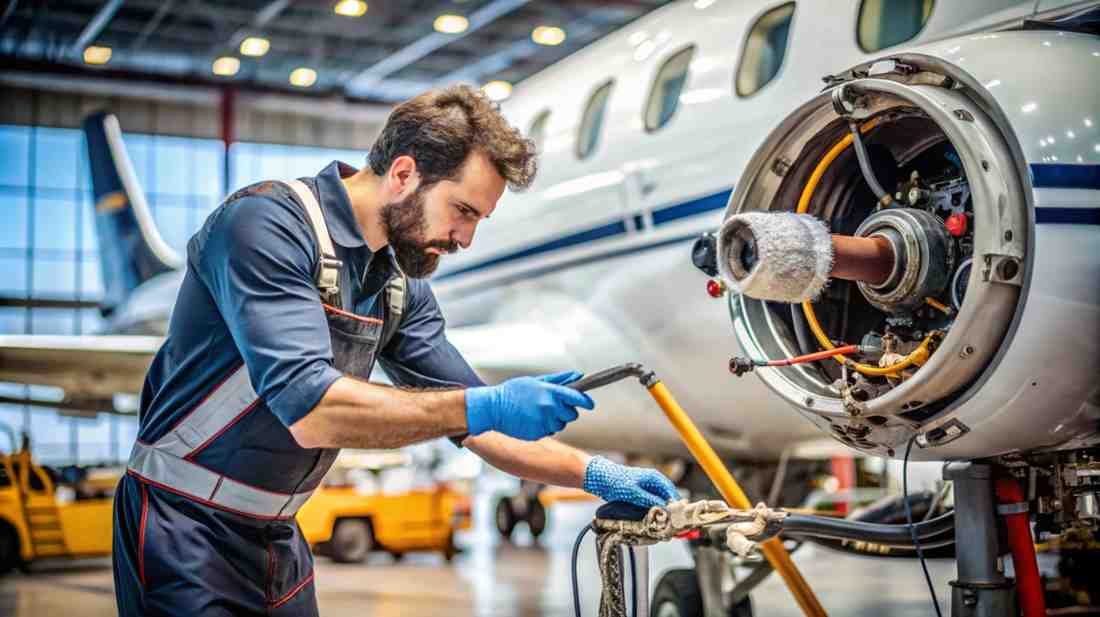
Phase 1: Meet Experience or Education Requirements
This is where the real work begins. You have two paths to choose from: formal education or on-the-job experience.
Option 1: FAA-Approved Aviation Maintenance Technician School (AMTS)
If you’re looking for the more structured route, attending an FAA-approved school is the best option. These schools offer programs that cover the technical knowledge you need along with hands-on training.
Here’s the catch: you’ll need to complete a program that’s certified under 14 CFR Part 147, which typically takes 18 to 24 months to complete. Once you’ve finished, you’ll be eligible to take the exams.
To find a list of accredited schools, head to the FAA website. These programs are designed to give you all the tools and knowledge you need to hit the ground running.
Option 2: On-the-Job Experience (OJT)
If you prefer a more practical, experience-driven approach, you can choose to gain your qualifications on the job. You’ll need to complete at least 18 months of hands-on work for either the Airframe or Powerplant rating, or 30 months if you’re working toward both.
You can get this experience by working at a maintenance facility, through military service, or with an FAA-certified employer. Be sure to document everything with logbooks, pay receipts, and employer statements signed by a licensed A&P mechanic.
Phase 2: Pass the FAA Examinations
Once you’ve met the experience or education requirements, it’s time to take the three FAA exams. These exams need to be passed within 24 months of each other to keep the process moving smoothly.
Written Knowledge Tests
The written tests consist of multiple-choice questions and are administered at an FAA-approved testing center. You’ll need to pass three exams:
- General Knowledge: Covering basic aviation principles.
- Airframe: Focusing on the structural aspects of aircraft.
- Powerplant: Covering aircraft engines and related components.
Each test requires a minimum score of 70% to pass.
Oral Test
After you’ve passed the written exams, you’ll sit down for an oral test with a designated FAA examiner. This is a more interactive test where you’ll be asked to demonstrate your understanding of aircraft maintenance principles and practices. Think of it as a verbal exam on everything you’ve learned.
Practical Test
Finally, the practical test is a hands-on assessment where you’ll be asked to demonstrate your skills on actual aircraft components. This test is conducted in real-world conditions, and you’ll be required to perform maintenance and repairs as a demonstration of your competency.
What Happens After You Pass the FAA Exams?
Once you’ve passed all three exams, you’ll be awarded your A&P certificate! This means you’re now a fully certified aviation maintenance technician. With this certification, you can:
- Perform aircraft repairs.
- Sign off on repairs and maintenance.
- Work on a variety of aircraft types.
You’re ready to enter an exciting career where you’ll have the opportunity to travel, work with advanced technology, and play a crucial role in aviation safety. Plus, the job market for aviation mechanics is thriving, with plenty of opportunities for growth and specialization.
Frequently Asked Questions
1. How long does it take to get an A&P license?
It typically takes between 18 to 24 months if you attend an FAA-approved school. If you go the on-the-job route, it could take about 30 months to meet the experience requirements.
2. Do I need a degree to get an A&P license?
No, a degree isn’t required. However, you do need to complete either an FAA-approved training program or accumulate on-the-job experience to qualify for the exams.
3. How much does it cost to get an A&P license?
The cost can vary depending on your chosen path. Attending a formal aviation maintenance technician school can cost anywhere between $15,000 and $30,000, while the on-the-job route might be less expensive but requires more time.
4. Can military experience count toward my A&P license?
Yes, military experience in a relevant field can count toward your A&P license. You’ll need to provide documentation, such as a DD Form 214, to prove your qualifications.
Ready for Takeoff?
Now you have a clear idea on how to obtain an aviation maintenance repair license is no easy feat, but it’s absolutely worth the effort. Whether you go the formal school route or build your experience hands-on, you’ll be entering an exciting and rewarding field. Keep pushing, keep learning, and soon enough, you’ll be the one responsible for making sure the skies stay safe and sound.
The journey might be tough, but like the planes you’ll one day work on, you’re built to fly high. So, what are you waiting for? Your career in aviation is calling!






Leave a Reply