


Knowing how to become an air traffic controller is crucial for anyone aspiring to manage aircraft safely in the skies. Air traffic controllers ensure the smooth flow of air traffic, prevent collisions, and guide aircraft during takeoff, landing, and en-route operations. This career requires precision, quick decision-making, and rigorous training, but it offers high pay, job stability, and the satisfaction of keeping the skies safe.
What Does an Air Traffic Controller Do?
Air traffic controllers coordinate aircraft movements to ensure safe and efficient operations. Responsibilities vary depending on the type of facility:
- Tower Controllers: Oversee takeoffs, landings, and airport ground traffic.
- Approach/Departure Controllers: Manage arriving and departing flights within a controlled airspace.
- En-route/Center Controllers: Monitor aircraft in transit between airports at higher altitudes.
Controllers communicate constantly with pilots, use radar and navigation systems, and make split-second decisions to maintain safety.
General Steps to Becoming an Air Traffic Controller

1. Meet Basic Eligibility Requirements
- Age: Minimum 18 years, with upper age limits (e.g., 30 for FAA, 27 for AAI General Category).
- Citizenship/Residency: Must be a citizen or have legal working rights in the country of application.
- Education: Bachelor’s or associate’s degree in aviation, engineering, or a related field, often from an approved program.
- Language Proficiency: High level of English proficiency (ICAO Level 4 or higher).
2. Pass Entrance Exams and Screenings
- Testing: Candidates must pass pre-employment tests, like the AT-SAT in the U.S. or FEAST in Europe.
- Medical & Background Checks: Includes stringent physical exams, vision and hearing tests, and security clearance.
3. Complete Formal Training
- National training academies provide intensive instruction: FAA Academy (USA), Civil Aviation Training College (India), etc.
- Training covers airspace management, regulations, radar operations, and simulation exercises.
4. On-the-Job Training (OJT) & Licensing
- After academy training, candidates work under supervision as developmental controllers.
- Facility-specific training and exams lead to certification/licenses with ratings (Aerodrome, Approach Radar, En-route) by authorities like FAA or DGCA.
Educational Requirements

While a high school diploma is the minimum requirement, aspiring ATCs benefit from:
- College Degree (Preferred): Aviation, aeronautical science, engineering, or mathematics.
- FAA-Approved AT-CTI Program: Enhances chances of FAA selection and provides a direct path to training.
- Relevant Courses: Physics, mathematics, computer science, and communication.
FAA Requirements and Qualifications (U.S.)
- Age: Under 31 at application.
- Citizenship: Must be a U.S. citizen.
- Medical & Vision: Must meet FAA standards.
- Testing & Security Clearance: AT-SAT exam, interviews, and background check.
Training and Career Path
1. FAA Academy Training: 12–15 weeks of classroom and simulator instruction.
2. On-the-Job Training: Supervised work at a control facility.
3. Certification: Facility-specific exams lead to full ATC certification.
Career progression can lead from tower to en-route control, supervisory roles, or specialized positions.
Key Skills Required
Successful ATCs possess these personal qualities:
- Communication Skills: Clear instructions and active listening.
- Decision-Making: Quick, accurate judgments, especially in emergencies.
- Concentration & Focus: High attention over long periods.
- Problem-Solving: Rapidly address complex situations.
- Math Skills: Quick mental computation of speed, distance, and time.
- Stress Management: Ability to remain calm under pressure.
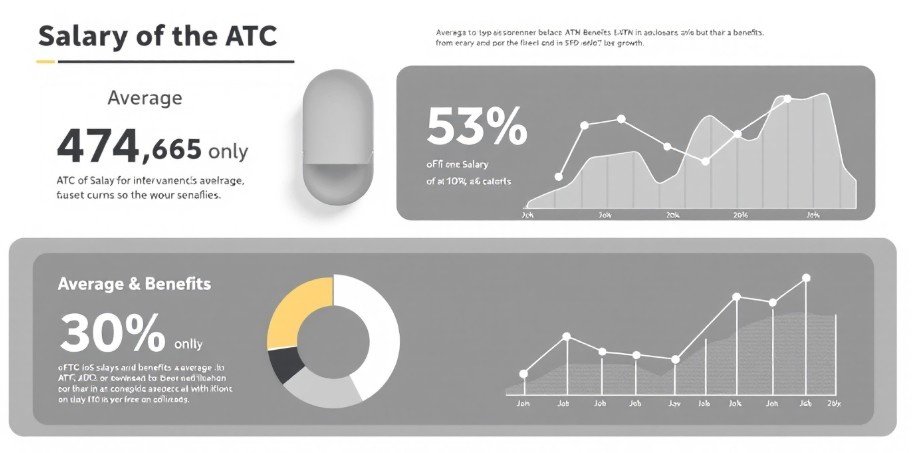
Salary and Job Outlook
- Average Salary: $130,000–$150,000 annually in the U.S.
- Benefits: Retirement, healthcare, and federal perks.
- Job Demand: Steady growth due to retirements and increased air traffic.
Tips to Become an Air Traffic Controller
- Start early in high school and focus on math, physics, and communication.
- Complete FAA-approved AT-CTI programs.
- Practice AT-SAT and situational awareness exercises.
- Attend aviation events and network with professionals.
- Maintain excellent health to meet medical requirements.
Frequently Asked Questions
1. What is the minimum age to become an air traffic controller?
Candidates must be at least 18 years old, with an upper age limit depending on the country.
2. How long is ATC training?
Training lasts 12–15 weeks at the FAA Academy or equivalent, followed by months of on-the-job training.
3. Can international students become air traffic controllers in the U.S.?
No, candidates must be U.S. citizens to work as FAA air traffic controllers.
4. What qualifications are needed for ATC?
High school diploma minimum, preferably a college degree in aviation or engineering, and completion of an AT-CTI program.
5. What personal skills are essential for air traffic controllers?
Strong communication, decision-making, focus, problem-solving, math skills, and stress management are crucial.
Conclusion
Knowing how to become an air traffic controller involves meeting educational and medical requirements, passing exams, completing academy and on-the-job training, and developing essential personal skills. By following this structured path and preparing effectively, aspiring controllers can secure a high-paying, fulfilling career while ensuring the safety of millions of passengers. With dedication, training, and skill development, you can confidently step into the critical role of an air traffic controller and enjoy a lifelong aviation career.






Leave a Reply